
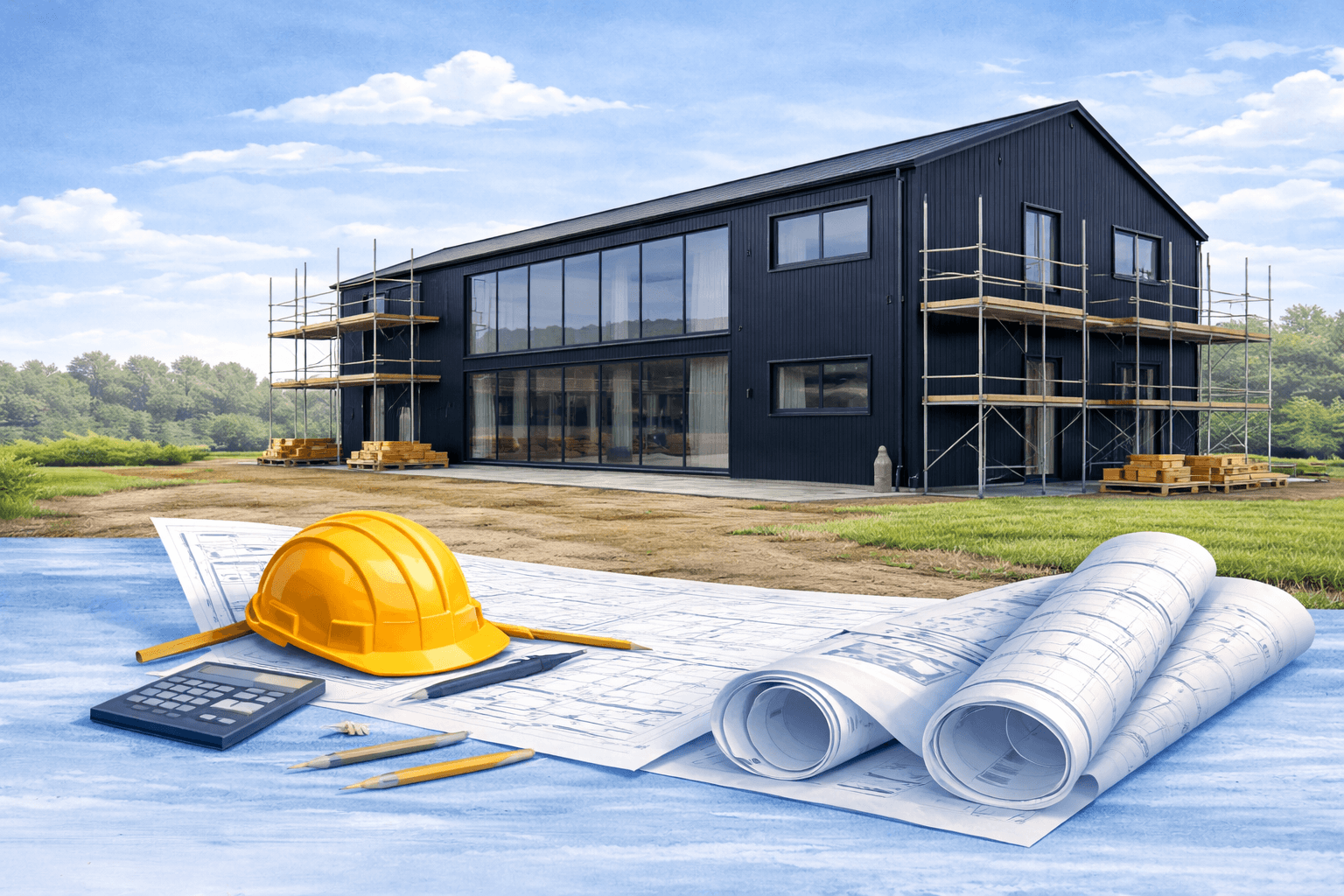
Read the full case study: Holmshaw Barn — the complete story
How a derelict agricultural barn became a 300m² contemporary home for £300,000 and why the experience eventually inspired BuildaPath.
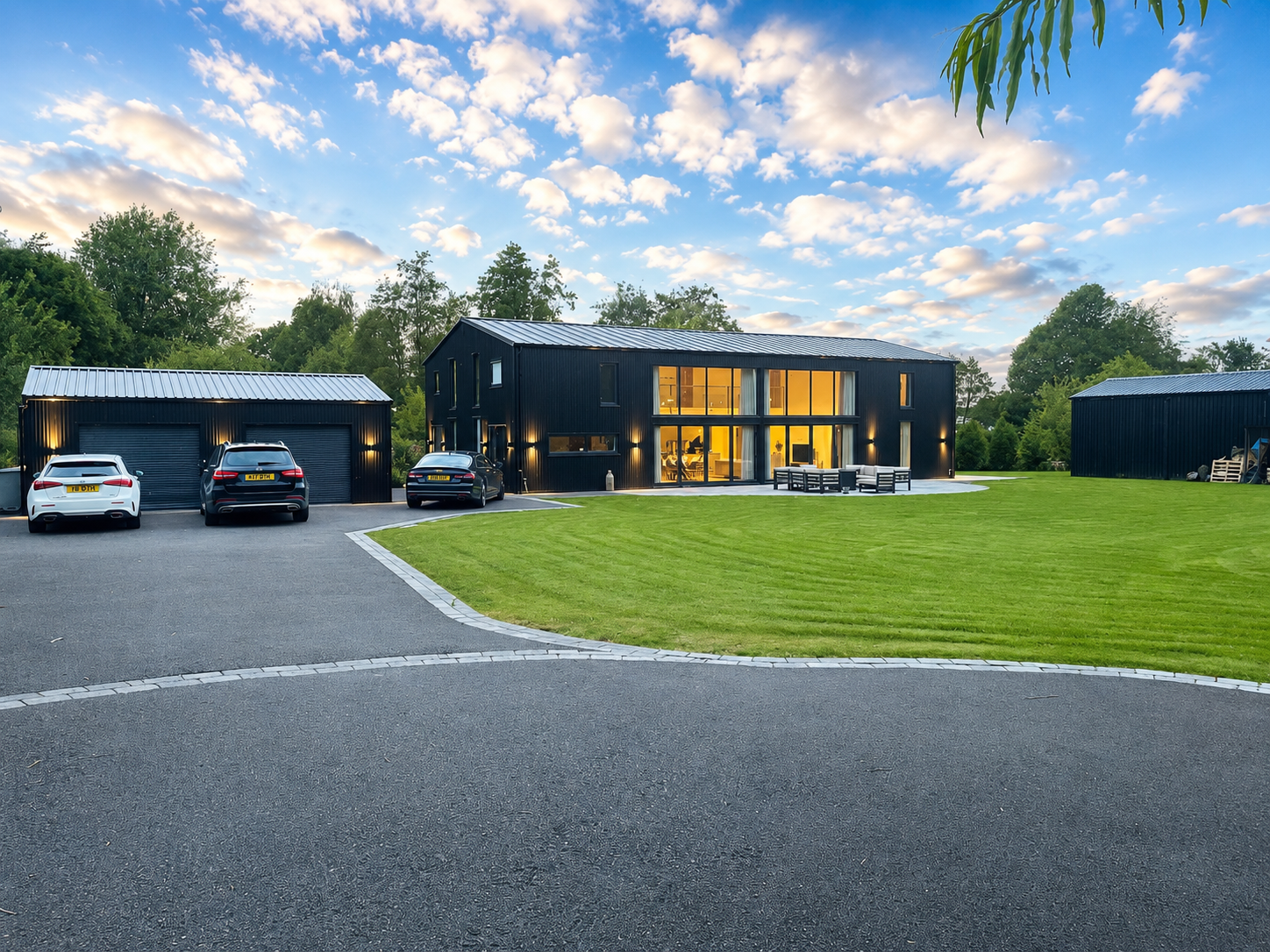
A three-part case study on the build that made BuildaPath necessary.
-
Holmshaw Barn at a Glance
-
Project Type: Agricultural barn conversion with full vertical extension
-
Location: South Cheshire
-
Build Period: 2018–2020
-
Floor Area: 300m²
-
Garage: Detached double garage
-
Procurement Route: Self-managed, no main contractor
-
Total Cost: £300,000
-
Main Building Cost: Under £800/m²
-
All-In Cost (including garage and externals): ~£1,000/m²
Part One: The Project, the Goal, and the Odds
What Was There
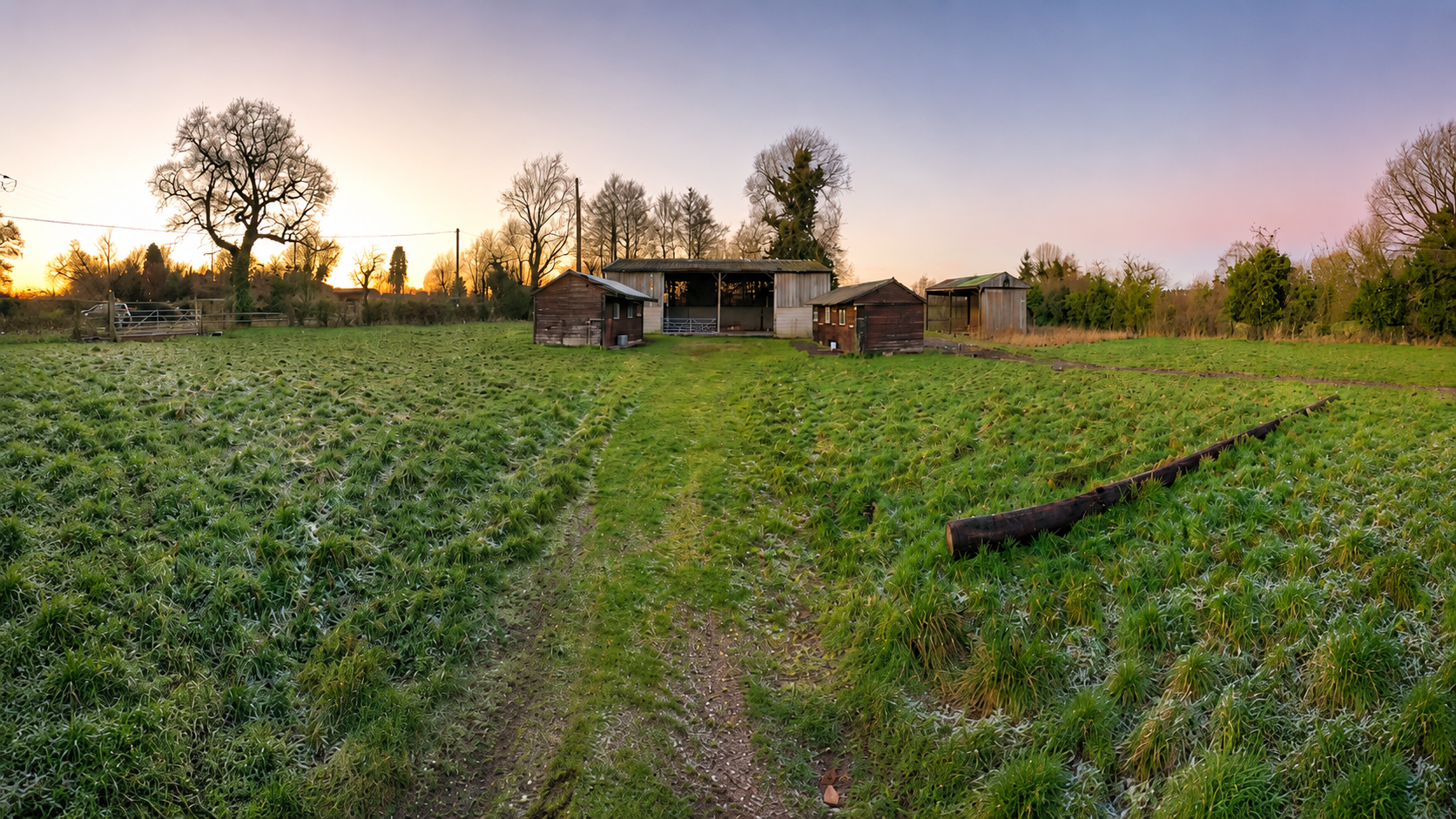
In January 2018, Holmshaw Barn was a slightly worn agricultural structure sitting in a semi-rural setting in South Cheshire. Frostbitten grass, Corrugated sheets, A cluster of outbuildings that had seen better decades. Viewed from the field, it was difficult to imagine that anything significant could become of it.
The structure itself was a functional agricultural shell; concrete block walls, a steel portal frame, an industrial roof. It was not listed. It had no heritage constraints beyond its agricultural planning consent. But it also had no insulation, no suitable floor slab, no services, no first floor, no habitable space of any kind.
What it did have was potential, a decent footprint and planning permission to convert it into a home. Daniel Matthias of DMA Architecture did a fantastic job of maximising the design and working through the planning application. The plans alone were enough to get excited about, set against the reality of what stood in the field.
The Goal Nobody Thought Was Realistic
The target was to convert and vertically expand the building into a 300m² contemporary home, plus a detached double garage, for a total budget of £300,000 including all external works and landscaping. That meant delivering the main building for under £800 per square metre.
For context: The typical benchmark for a new build of equivalent specification in the North West in 2018/19 was comfortably above £1,500/m² when delivered by a main contractor. For a conversion with the structural complexity of adding a full first floor, new steel, new roof, and extensive glazing, the figure was likely higher.
The ambition was not just to build a standard house. It was to build one that respected its surroundings while bringing a modern, contemporary look to the property with floor-to-ceiling architectural glazing across the front elevation, exposed structural steelwork, a double-height open-plan living space and a first-floor gallery landing with oak and glass balustrade.
None of those are budget finishes yet the budget was, by any conventional measure, tight.
There was no main contractor, no project manager, no quantity surveyor on retainer. Just a determined owner, a collection of specialist trades and the conviction that the difference between a £500k build and a £300k build is not quality but management.
The Reality Check
The romantic version of a self-build starts with architectural drawings, mood boards and exciting plans. The real version started on a freezing January morning in 2018.
I remember standing in snow boots watching a digger cut the first access track through the frost-hardened ground. It was one of those moments every self-builder imagines, the beginning of something significant. The excitement lasted about a day.
Over the following week and a half I found myself freezing cold, shifting broken concrete as the existing slab was pecked out by machine and the new footings were prepared. The reality of what I'd taken on arrived very quickly. This wasn't a television renovation programme. It was physical, messy and relentless.
That lesson repeated itself throughout the project.
I learnt that angle-grinder sparks are significantly hotter than they look when you're removing old steelwork. I spent days cutting utility channels into existing concrete walls and floors, emerging covered in white dust everywhere except the parts protected by my mask. After long sessions with the concrete grinder, my hands felt like they were still vibrating three days later.
Looking back, those experiences gave me an enormous appreciation for the tradespeople who do this work every single day. As someone in his early thirties at the time, I found many aspects of the project physically demanding. The people who build our homes do this week after week, often in difficult conditions and it gave me a level of respect for the industry I simply didn't have before the project began.
The Core Approach
This project was not delivered cheaply by cutting corners. It was delivered efficiently by eliminating waste.
The distinction matters. Cheap means inferior materials, rushed trades and a finished product that disappoints. Efficient means the same skilled tradespeople, the same specification products and the same quality outcomes but without the outsourcing of management cost, trade coordination, procurement of materials and negotiations with suppliers that, rightfully, increase every main contractor quote.
What followed was 14 months of intensive hands-on management that would eventually become the direct inspiration for BuildaPath.
The People Behind Holmshaw Barn
No self-build is ever completed alone. Holmshaw Barn benefited from the expertise, commitment and hard work of a lot of people.
- BuildStore — Mortgage Broker
- Darlington Building Society — Mortgage Provider
- BuildZone — Structural Warranty
- DMA Architecture (Daniel Matthias) — Design and Planning
- Steve Clarkson — Structural Engineer
- Jewson — Principal Materials Supplier
- Phil Evans — Principal Builder, start to finish
- Colin Ledgar — Electrical Works
- Ben Ledgar — Joiner for Garage Build
- Gary & Dave Evans — Plumbing and Tiling
- Steve Rimmer, Homestyle Property Improvements — Glazing
- Dave Marland — Steelwork and Cladding
- Levi — Plastering
- Jake Bourne-Withey — Groundworks, Drainage and Landscaping
- Tile Mountain — Floor and Bathroom Tiling Supply
- Family and friends — Site Clearance, Painting, Insulation and Plasterboarding Support
BuildaPath is the digital project manager for your build.
BuildaPath helps homeowners manage self-builds, extensions and conversions with stages, tasks, budgets, funding, risks and reports in one place.
Start your 30-day free trial at www.buildapath.co.uk, no card required.